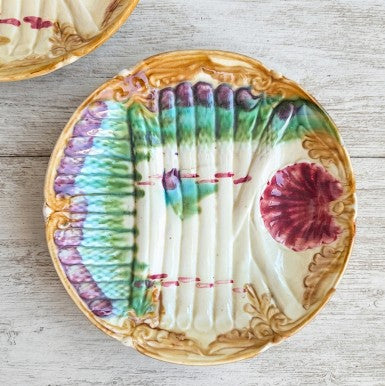
Welcome to the fascinating world of antique and vintage ceramics. Whether you are an experienced collector, a lover of tableware, or passionate about flea market and retro decor, our selection of barbotine and majolica will charm you. Each piece in our catalog is rigorously selected for its authenticity, timeless charm, and rich history.
What are Majolica and Antique Barbotine?
Although often confused, majolica and barbotine each possess their own technical and historical identity, making them the pride of global ceramic heritage.
Majolica (or Maiolica): Originating from the Italian Renaissance, it historically refers to tin-glazed earthenware covered with an opaque enamel and brightly painted decorations. In the 19th century, English manufacturers (like Mintons) reinvented the term to designate relief pieces covered with colorful, transparent lead glazes, achieving spectacular brilliance.
Barbotine: A dominant technique of the 19th and early 20th centuries, barbotine originally referred to a clay slip diluted in water used to attach relief decorations (flowers, fruits, animals) to pottery. By extension, the term describes these magnificent faience pieces with naturalistic, vegetal, or anthropomorphic forms, typical of the Art Nouveau spirit.
Major Manufacturers and Provenances to Discover
Our online antique shop celebrates the diversity of craftsmanship by gathering pieces from all the greatest workshops, potteries, and historical manufacturers:
French Craftsmanship
Explore the essential creations from the manufactures of Sarreguemines, Onnaing, Orchies, Fives-Lille, or the famous faience from Saint-Clément and Salins. We seek out for you the famous anthropomorphic pitchers (pig, duck, character pitchers), asparagus or strawberry plates, and cachepots with exuberant floral motifs.
English and European Style
Be tempted by the robustness and brilliance of English Majolica (Wedgwood, George Jones), the delicacy of Belgian productions (Wasmuël, Nimy), or the Mediterranean charm of Italian and Iberian majolicas.
Why Incorporate Barbotine into Your Vintage Decor?
Far from being reserved for our grandmothers' dressers, relief ceramics are now a leading trend in contemporary interior design (Cottagecore, Maximalist, or Arty styles).
Unique Tableware: Surprise your guests with antique oyster plates, barbotine game dishes, or a vintage pitcher repurposed as a flower vase.
A Touch of Color and Texture: A majolica cachepot or an Art Nouveau planter immediately adds depth, brilliance, and a touch of botanical authenticity to your living room.
A Sustainable Investment: Buying antiques means choosing eco-responsible decoration, rich in history, which gains value over time.
Our Commitment:
Because barbotine and majolica require the utmost care, we are committed to providing you with transparent descriptions detailing the condition of each piece (patina, any hairline cracks, chips, or freshness of the glaze). Each package is ultra-securely wrapped with appropriate materials to ensure risk-free transport to your home.
FAQ – All You Need to Know About Barbotine and Majolica
How to recognize authentic antique barbotine?
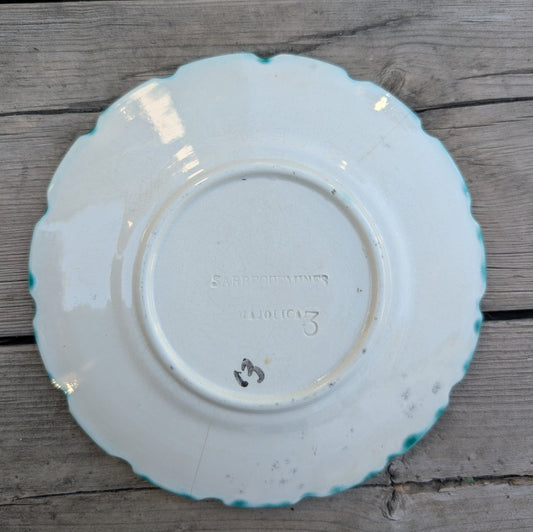
Authentic antique barbotine is recognized by the quality of its reliefs, the depth of its glazes, and often by the presence of an impressed mark or a manufacturer's stamp on its base (such as Sarreguemines or Onnaing). Period pieces also show traces of stilts (small unglazed dots on the base, related to 19th-century firing) and natural crazing of the glaze (age-related cracks).
What is the difference between faience, barbotine, and majolica?
Faience is the base material (porous earthenware covered with enamel). Majolica is a specific type of faience characterized by very bright colored glazes and often relief decorations. Barbotine uses a technique of applied relief decoration or naturalistic molding. All barbotine is faience, but not all faience is barbotine.
How to clean and maintain vintage majolica without damaging it?
To clean antique majolica or barbotine, wash it gently by hand in lukewarm water with a mild soap (like Marseille soap). Absolutely avoid dishwashers, abrasive sponges, and prolonged soaking, which could weaken the glaze or allow water to penetrate the porous body if the piece has crazing.